|
|
|
|
|
 |
|
|
|
|
|
|
|
|
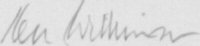
Ken Wilkinson
| Flying Officer Ken Wilkinson (deceased) Battle of Britain pilot flying Hurricanes, he flew Spitfires with 611 Sqn and then 616 Sqn at Kirton-in-Lindsey and 19 Sqn at Fowlmere during 1940 and after a spell instructing returned to operations on Spitfires, with 234 and 165 Squadrons. After spending time with 53, 24 and 10 Operational Training Units, he left the RAF in November 1945 and served in the RAFVR. Ken said : From 1st September 1939 I wrote myself off. I thought, 'you've got no chance' lasting through whatever is going to be. It was quite obvious, in the way the Germans were moving, they were going to make a hell of a war out of it, so I was ready for war. I can remember saying 'we've got to stop this fellow Hitler'. When you think of all the thousands of citizens that were being killed by this absurd bombing. They had to pay for it didn't they. Yes, we lost people. Friends that didn't come back. I don't think we were the sort of people to brood over it, ever. You have to get into an attitude to make sure that you're as cold as a fish. Once someone has failed to return, that's it. Fortune smiled on me and not on some of the others. I can only say that whoever it was who popped off at me, wasn't a very good marksman. It transpired that we were doing something far more important than we thought. As far as we were concerned, it was just that there were some untidy creatures from over the other side of the channel, trying to bomb England and the United Kingdom. And we didn't want them to bomb us. After all, we never asked the Germans to start this nonsense, did we? But they did, and we had to stop them, and we did. It's our country. You die for you country. |
| Navigation | |
| Page 2 of 2 | Previous .. Page 2 |
|
|
|
|
|
|
| Navigation | |
| Page 2 of 2 | Previous .. Page 2 |
| Text for the above items : |
The Longest Day by Adrian Rigby. Published to commemorate the 60th anniversary of the D-Day landings on 6th June, depicting Spitfires of 44 Squadron led by Johnnie Johnson. |
Decisive Blow by Anthony Saunders. The Luftwaffe had done everything in its power to pummel London into submission but they failed. By the end of September 1940 their losses were mounting. For weeks since the early days of September, London had been the main target for the Luftwaffe and during that time Luftwaffe High Command had grown increasingly despondent as their losses steadily mounted. Far from being on the brink of collapse RAF Fighter Command, though vastly outnumbered, had shown an incredible resilience. The fighting had reached a dramatic climax on Sunday 15th September when, bloodied and bruised, the Luftwaffe had lost the upper hand on a day of intense combat that had culminated with a humiliating retreat. Almost every day that had passed since then had seen the Luftwaffe do everything in its power to pummel London and regain the initiative, but the daylight raids were becoming increasingly costly. On Friday 27th September, 80 days after the Battle of Britain had officially begun, the Luftwaffe came once more, this time concentrating on the fastest bombers they had - Ju88s and Bf110s. And they came in force, principally targeting London and Bristol. Anthony Saunders' superb painting depicts one of these raids, this time by bombers from KG77 as they head over the Medway Estuary, east of the City of London, in an attempt to attack the capital's warehouses and docks. Among the many units defending the capital that day was 92 Squadron from Biggin Hill and Anthony portrays the Spitfire of Pilot Officer Geoffrey Wellum in his dramatic piece. With a deft flick of the rudder Wellum banks his fighter away to port seconds after sharing in the destruction of a Ju88. It was just one of more than 50 German aircraft destroyed by the RAF during the day. |
Those Valiant Few by Robert Taylor. The Battle of Britain commenced at the beginning of June 1940, and for the next two and a half gruelling months the young men of Royal Air Force Fighter Command, duelled with the cream of Goerings Luftwaffe over the skies of southern England. It was to become the greatest aerial conflict in aviation history. Always outnumberd, the valiant young pilots fought with a determined fierceness and intensity, and never once did their spirit waiver. By the end of September the battle was won, but many had made the ultimate sacrifice. |
Height and Sun by Robert Taylor. If you had the height, you controlled the battle. If you came out of the sun, the enemy could not see you. If you held your fire until you were very close, you seldom missed. These three basic rules contributed to the prowess in aerial combat of some of the most successful fighter pilots in history and seldom were they more valuable than when outnumbered. Between July and October 1940 the brave young pilots of RAF Fighter Command were under intense pressure from the constant attacks of the Luftwaffe and the Hawker Hurricane was the machine of the Battle of Britain, accounting for 80 percent of Allied victories. In this painting, Hurricanes of 32 Sqn climb high into the morning sky, gaining Height and Sun in an attempt to take the advantage over the onslaught of enemy fighters - August, 1940. This image captures the surreal calmness above the clouds, belying the fury of action and ultimate sacrifices made in those crisp blue skies. |
Bitter Engagement by Robert Taylor. Just after midday on 27 September 1940 one of the bitterest engagements of the Battle of Britain took place in the skies over Kent when the Spitfires of 19 Squadron took on the Bf109s of JG54. In the huge dogfight that ensued, 19 Squadron claimed 8 enemy aircraft destroyed. |
Inspiration by John Young. Official limited edition print of the 60th Anniversary of the Douglas Bader Foundation. Douglas Bader (D-B) leading Dogsbody Section, 616 Squadron, including Johnnie Johnson (YQ-E) , Cocky Dundas (YO-A) and Jeff West (YQ-H) on his final operational take off from Westhampnett on August 9th 1941. |
| Navigation | |
| Page 2 of 2 | Previous .. Page 2 |
|
Contact Details |
|
Sign Up To Our Newsletter!
This website is owned by Cranston Fine Arts. Torwood House, Torwoodhill Road, Rhu, Helensburgh, Scotland, G848LE Contact: Tel: (+44) (0) 1436 820269. Email: cranstonorders -at- outlook.com
|
|
|